I Was Skeptical About Bidets in the UK – Here’s Why I Changed My Mind
By James Hargreaves · Updated October 2026 · 9 min read
- Bidet supplies are a fluid category 5 risk, so any installation must be fed through a suitable backflow prevention arrangement [1]
- Compliance belongs to the supply, not to the product: the arrangement the regulator's own checklist gives is a break tank with a Type AB air gap [13], and check valves alone do not meet the required level of protection [14]
- Nozzle cleanliness is a known, studied issue that routine cleaning manages — the risk is documented, not hidden [6]
Why I Assumed Bidets Would Never Work in a British Bathroom
I'll be honest with you: for years I thought bidets were a European affectation that had no business in a British loo. Our bathrooms are small, most of us grew up with nothing but paper, and the habit is so deeply ingrained that the idea of plumbing in a water spray felt faintly ridiculous.
The same cultural and space reasons come up again and again in UK discussions about why bidets never took off here [10]. And I shared every worry you probably have right now. Will it fit behind the pan? Will I need to pay a plumber a small fortune? Is it actually hygienic, or is it just a wet version of the same problem? And is it worth spending money on something when a roll of Andrex already does the job?
After digging into the actual regulations and the research, I changed my mind. Not because bidets are fashionable — they aren't, not here — but because the practical objections I'd been carrying around don't survive contact with the facts.

The UK Water Regulations That Actually Make Handheld Sprays Simpler Than I Expected
Here's the bit that surprised me most. Both the cold supply, and where appropriate the hot supply, to a bidet must be fed through a suitable fluid category 5 backflow prevention arrangement [1]. That sounds intimidating until you understand what it means in practice.
Bidet supplies are classified as a fluid category 5 risk, and the highest part of that backflow risk zone must sit not less than 15mm below any cistern serving the bidet[11]. In plain English: the water feeding your spray can never be allowed to travel backwards into your mains supply, and there's a defined physical clearance that keeps it that way.
Here is the part product pages get wrong, and it is the thing to know before you spend anything. The regulator publishes a checklist for exactly this fitting — a shower bidet next to a WC — and the arrangement it gives as typically acceptable is a break tank incorporating a Type AB air gap [13]. That is a piece of plumbing upstream of the spray, not a part inside it. Check valves on their own do not reach the level of protection this class of appliance requires [14]: they stop water travelling the wrong way, which is a different and lesser job. So the question to put to your installer is about the arrangement feeding the spray, never about what the box says is inside it.
Before you connect anything, ask your installer one question: which category 5 arrangement will feed this spray? A break tank with a Type AB air gap is the answer the regulator's checklist gives [13]. Do not accept a check valve named in the product documentation in its place [14]. Then check the 15mm clearance below the cistern serving it yourself [2]; it takes thirty seconds with a tape measure.
What the Research Says About Hygiene — and Why It Beat My Toilet Paper Assumption
My hygiene objection was simple: surely wiping with paper is cleaner than spraying water about? Turns out that assumption was doing a lot of unearned work.
Researchers studied microbial contamination of hands after defecation, with and without bidet use, using 32 nursing students wearing double gloves [4]. The specific question was whether sprays reduce contamination compared with wiping [5]. Notably, the same body of work states plainly that the extent of that reduction was previously unclear [4] — so this is evidence being genuinely tested, not a marketing claim dressed up as science.
That reframes the whole argument. The honest question isn't "are bidets automatically cleaner?" It's "what does controlled comparison actually show?" That's a far better starting point than either side of the UK debate usually manages.
The Nozzle Cleanliness Question That Genuinely Worried Me
This was the objection I couldn't shake. If a nozzle sprays water at you, what's growing on that nozzle between uses?
It's a legitimate concern, and the research community takes it seriously. There's been demand for more sanitary designs because spray nozzles can become contaminated and potentially act as a reservoir for the horizontal transmission of drug-resistant bacteria [6]. That's not a scare story — it's a stated research rationale.
Long-term experimental work plus survey studies across 2015–2016, 2018–2019 and 2020–2021 measured how nozzle cleansing affects the total viable count in spray water [3]. The conclusion I drew wasn't "avoid bidets." It was "clean the nozzle."
That's the thing about a known, studied, manageable risk — it's exactly what you want from something you're installing in your home. Unknown risks are the problem. Documented ones with a simple maintenance routine are just... maintenance.
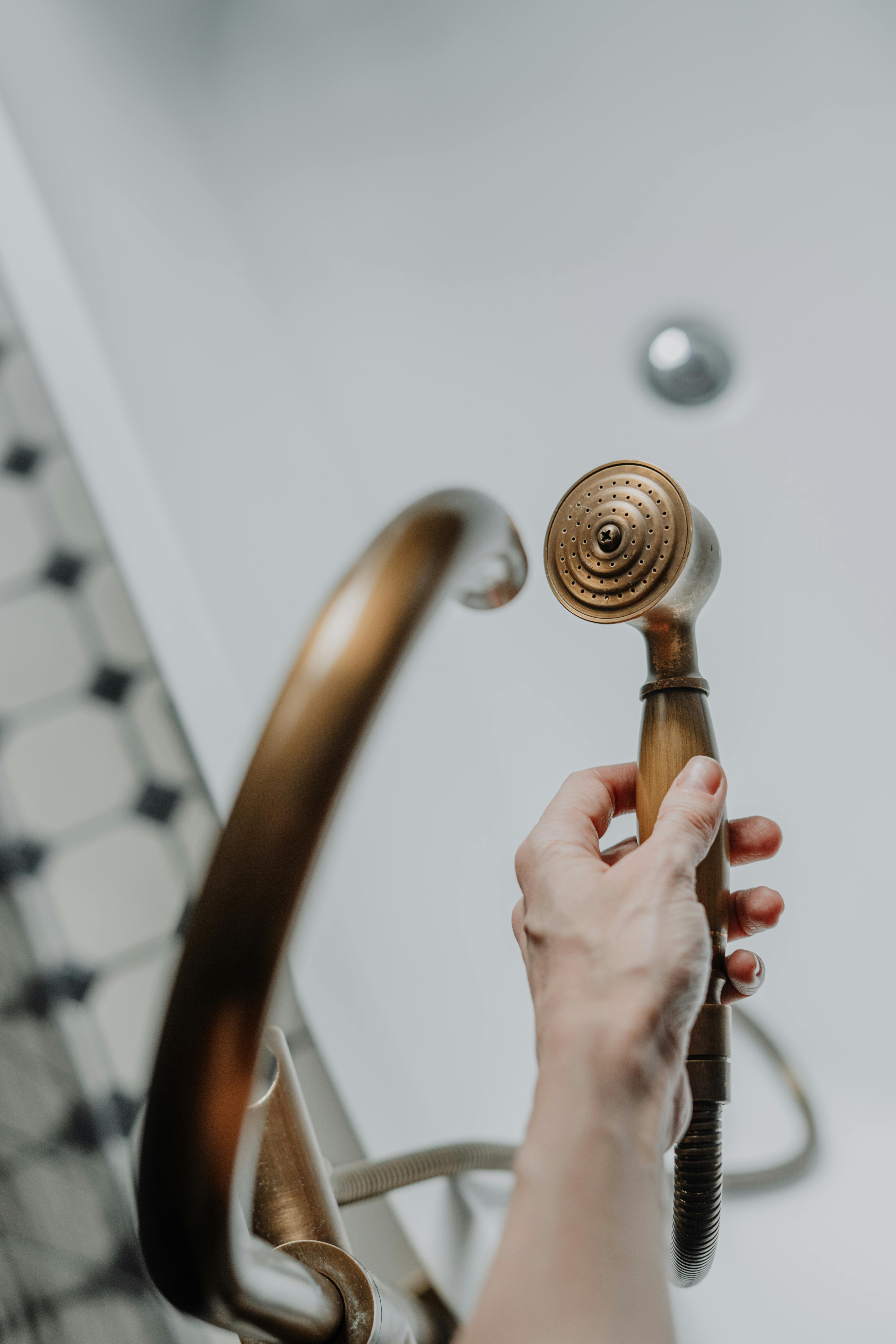
Why Japan's Bidet Culture Is the Comparison That Actually Convinced Me
Bidet-toilets are widely used in households and public spaces in Japan [3]. Not a niche experiment. Not a novelty for early adopters. A mainstream, long-established norm across an entire country.
Compare that to the UK situation, where the honest explanation offered in online discussions is that it's not in our culture and space is often tight [8]. That explains the gap. It doesn't justify it.
If a whole nation normalised this with the same basic plumbing questions and the same hygiene considerations, then the UK barrier is habit and availability — not feasibility. That's the realisation that flipped my position. We're not talking about whether it can work here. We're talking about whether we've bothered.
The Cost and Installation Reality for a UK Household
Let's talk money, because that's the worry nobody admits to first. Be honest about one line in that budget: the backflow protection is plumbing work, not something the product brings with it — a break tank and its air gap sit in the supply [13]. Whether that is cheap depends entirely on what your supply already looks like.
The 15mm clearance rule isn't a reason the job can't be done in a standard UK toilet — it's a fitting consideration your installer checks as a matter of course [2]. On running costs, a handheld spray session uses 0.5 litre of water.
I'm not quoting prices here, because that's your shopping decision. The point is that the regulatory and product landscape already exists for UK buyers. Cost is a question of which unit you choose, not whether one can legally be fitted.
Common Concerns
"Won't a bidet spray just spread bacteria around the bowl?"
This was my instinct too, and it's the reason the nozzle research exists in the first place. The documented concern is that spray nozzles can become contaminated and potentially act as a reservoir for horizontal transmission of drug-resistant bacteria [6]. But that's a statement about nozzle hygiene, not about the spray mechanism being inherently unhygienic. The studies that measured nozzle cleansing against total viable count in spray water exist precisely because the variable is cleanable [3]. A contaminated nozzle is a maintenance failure, not a design verdict.
"Isn't the backflow risk too serious for a domestic bathroom?"
The risk is real and it's rated seriously — bidet supplies are fluid category 5, the highest classification [1]. But "serious" and "unmanageable" are different things. The regulations don't ban bidets; they specify how they must be fed, including the requirement that the highest part of the backflow risk zone sits not less than 15mm below any cistern serving the bidet [2]. What the regulations will not accept is a check valve on its own [14]; the checklist for this fitting gives a break tank with a Type AB air gap [13]. The category 5 rating tells you to get the supply right. It is not a reason to walk away.
"If bidets were genuinely better, wouldn't the UK have adopted them already?"
Adoption patterns track culture and space, not merit. The explanation that recurs in UK discussions is exactly that — it's not in our culture and space is often tight [8]. Meanwhile bidet-toilets are widely used in households and public spaces in Japan [3], operating under the same basic plumbing and hygiene questions. A slow uptake here tells you about British bathroom habits, not about whether the product works.
What I'd Tell Another Sceptical Brit Before They Buy
My scepticism was reasonable. It just happened to be built on culture and assumption rather than the regulations and research that actually govern these products in the UK.
So here's what I'd say. First, settle the supply before you settle on a product. Ask which category 5 arrangement will feed it — the checklist gives a break tank with a Type AB air gap [13] — and whether the 15mm zone rule can be satisfied where you want it fitted [2]. Get that right before you think about anything else.
Second, treat nozzle cleaning as part of normal bathroom upkeep. Given the documented contamination concerns [6], that single habit addresses the main hygiene objection I started with — and it takes seconds.
Third, stop waiting for bidets to become "normal" here. They already are in plenty of other places. The only thing standing between a British bathroom and a bidet is a decision.
Further Reading
- [1] Both the cold, and where appropriate hot water, supply to a bidet must be suppli... (Official source)
- [6] BACKGROUND: There has been an increasing demand for more sanitary bidet seats in... (OpenAlex)
- [10] In this blog post, we will explore why this is so, discussing potential reasons ... (Web · sauben.co.uk)
- [11] the highest part of that backflow risk zone must sit not less than 15mm below an... (Verified source)
- [4] Objective: Electric toilet seats with water spray (bidets) are gaining in popula... (OpenAlex)
- [5] Bidet toilets (electric toilet seats with water spray) are increasing in popular... (OpenAlex)
- [3] Bidet-toilets are widely used in households and public spaces in Japan. The effe... (OpenAlex)
- [8] I know it’s not in our culture and it may be due to lack of space but I’m in Ita... (Web)
- [2] are a fluid category 5 risk. The zone of backflow risk is shown and the highest ... (Official source)
- [13] Both the cold water supply to a shower bidet, and where appropriate hot water, m... (Official source)
- [14] Check valves alone are not enough. While they prevent water from flowing in the ... (Official source)